
Lawn Aeration & Overseeding in Lincoln, NE
If your Lincoln lawn is thin, patchy, or hard as a brick, compacted clay soil is usually the reason. Core aeration pulls plugs out of the soil so water, air, and nutrients can finally reach the roots, and overseeding right after fills the thin spots with new grass. The ideal window in eastern Nebraska is August 15 to September 15. Aeration typically runs $75 to $150 depending on lawn size.
Why Lincoln Lawns Need Aeration More Than Most
Most soils in Lincoln are heavy clay or clay-loam. Clay compacts easily and water infiltrates slowly, which is genuinely not ideal for growing grass. Add foot traffic, mowing, and Nebraska’s freeze-thaw cycles, and the soil tightens up year after year.
Here’s what compaction actually does to your yard:
- Water runs off instead of soaking in, so irrigation gets wasted
- Roots can’t penetrate, so the lawn stays shallow-rooted and drought-weak
- Fertilizer sits on the surface instead of reaching the root zone
- Thin, open turf gives crabgrass and weeds the gaps they need
- Thatch builds up because soil microbes can’t reach it
Core aeration is the single most effective fix for a struggling Lincoln lawn. Not a fertilizer, not a spray. Opening the soil.
Core Aeration vs Spike Aeration
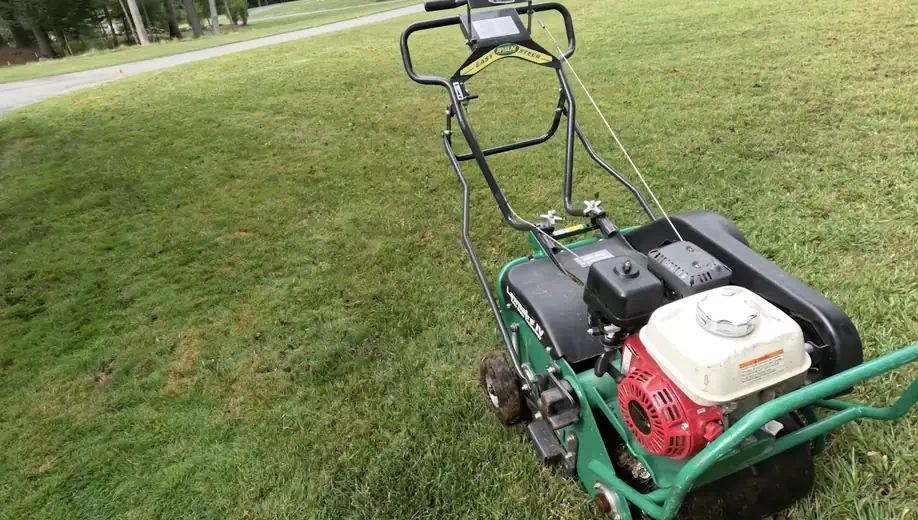
We use hollow-tine core aeration, which pulls actual plugs of soil and thatch out and leaves them on the surface to break down. Spike aerators just poke holes and push soil sideways, which in clay actually makes compaction worse around the hole. For maximum compaction reduction, hollow tines are what Nebraska Extension recommends.
Why Aeration and Overseeding Belong Together
Seed needs soil contact and steady moisture to germinate. Broadcasting seed onto compacted clay mostly feeds the birds. Aeration solves both problems at once:
- The plug holes become seed reservoirs, washing seed down into soil contact
- Soil inside the holes stays moist longer, which is exactly what germination needs
- As holes collapse, the new plant rises with an established root system
- The plugs break down and soil microbes feed on your thatch layer
This pairing does more for a thin lawn than almost anything else you can do.
The Best Time to Aerate and Overseed in Lincoln
| Timing | Activity | Why This Window |
|---|---|---|
| Aug 15 – Sept 15 | Primary overseeding window | Best window in eastern Nebraska |
| Sept 20 – Oct 20 | Core aeration | Also ideal for broadleaf weed control |
| Mid-March – mid-April | Secondary seeding option | Weaker, higher weed pressure |
| Late April – May 15 | Spring overseed (if needed) | Requires special pre-emergent handling |
Fall beats spring, and it isn’t close. Three reasons: there’s far less weed pressure competing with new seedlings, cool-season grasses grow best in cooling August-to-November temperatures, and fall usually brings better rainfall for germination.
Don’t Wait Too Long
Every week you delay seeding translates into 2 to 4 additional weeks the grass needs to mature before winter. Tall fescue especially has to be seeded no later than mid-September, because its seedlings take longer to develop cold hardiness and late seedings get winter-killed.
Choosing the Right Seed for Lincoln
| Grass | Germination Time | Best For |
|---|---|---|
| Tall Fescue | 10 days | Eastern Nebraska default, clay tolerance, drought recovery |
| Perennial Ryegrass | 10 days | Fast cover, often blended |
| Fine Fescue | 10 days | Shaded areas under trees |
| Kentucky Bluegrass | 3 to 4 weeks | Self-repairing via rhizomes, needs longer watering commitment |
Tall fescue is the preferred choice for eastern Nebraska, including Lincoln. Kentucky bluegrass is preferred further west. Many local lawns are a blend of the two.
Buy blue-tag certified seed. The blue tag means the seed was certified by the Nebraska Crop Improvement Association and the bag actually contains what the label claims. Avoid bags listing VNS (Variety Not Stated) or annual/Italian ryegrass, which causes problems later.
Watering After Overseeding
This is where most overseeding jobs fail, and it’s entirely on the watering. New seed needs light, frequent moisture, the opposite of established-lawn watering.
- First two weeks: water lightly 2 to 4 times per day depending on temperature
- As seedlings reach mowing height: reduce frequency, increase depth
- Mow as soon as it reaches height to encourage tillering
- Kentucky bluegrass: stay on top of watering a full four weeks, it’s slow to germinate
We leave you a clear watering schedule after seeding. Follow it for two weeks and your results are dramatically better.
Dethatching, Aeration, and Overseeding Together
If you don’t bag clippings, you’ll want dethatching roughly annually. Dethatching scrapes up dead grass that’s accumulated over seasons, which otherwise causes dead spots and blocks seed-to-soil contact. The full sequence for a badly thinned Lincoln lawn:
- Dethatch to remove accumulated dead material
- Core aerate to relieve clay compaction
- Overseed with blue-tag certified seed
- Fertilize with a starter application
- Water 2 to 4 times daily for two weeks
Aeration for Commercial and HOA Turf
Compaction is worse on commercial ground than on a home lawn, and for obvious reasons. Common areas take constant foot traffic, parking-lot edges get driven on, and construction of the property itself usually compacted the subsoil before any turf went down. On Lincoln’s clay, that combination produces thin, struggling common areas that no amount of fertilizer will fix.
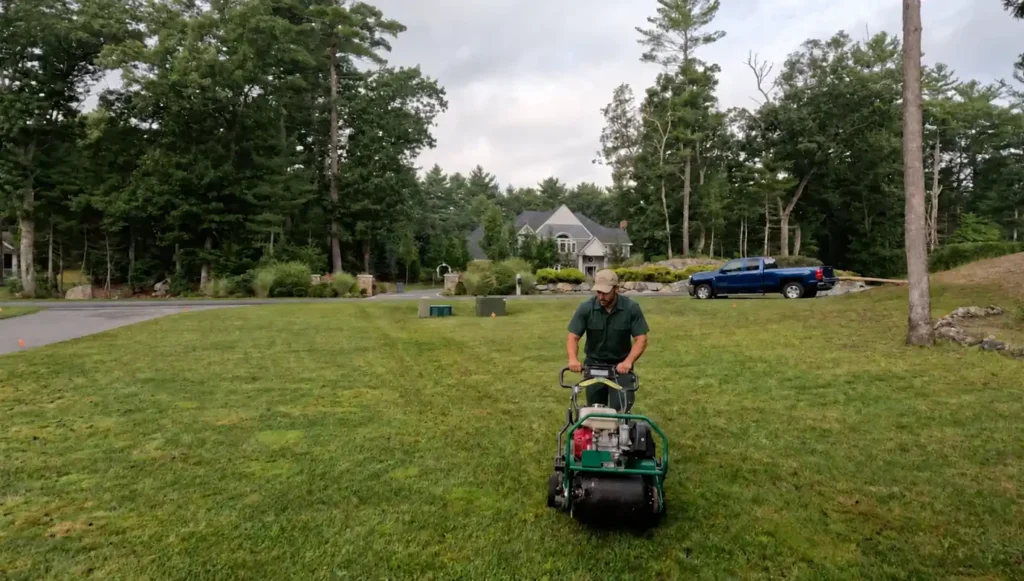
Annual core aeration is the single highest-value service on most commercial and HOA turf here. We schedule it in the fall window and pair it with overseeding so the property recovers before winter rather than being reseeded repeatedly every spring.
Larger properties are quoted per acre, and aeration can be scheduled over multiple days so no section of a parking lot or walkway is obstructed for long. See our Commercial Lawn Care in Lincoln, NE page for details.
Aeration & Overseeding Pricing in Lincoln
| Lawn Size | Core Aeration | Aeration + Overseeding |
|---|---|---|
| Up to 4,000 sq ft | $75 – $85 | $175 – $250 |
| 4,000 – 6,000 sq ft | $85 – $95 | $250 – $350 |
| 6,000 – 9,000 sq ft | $95 – $110 | $350 – $500 |
| 9,000 – 12,000 sq ft | $130 – $150 | $500 – $700 |
Lincoln core aeration generally runs $75 to $111 as a standalone service, with overseeding pricing depending heavily on lawn size and seed quality. We quote your specific yard.
Get My Free QuoteAeration & Overseeding FAQs
When is the best time to aerate a lawn in Lincoln, NE?
Fall, roughly September 20 to October 20, is ideal for core aeration in Lincoln. It’s also the best time for broadleaf weed control, so the two pair well. Spring aeration (late April to early May) is a secondary option.
When should I overseed my lawn in Lincoln?
August 15 to September 15 for eastern Nebraska. Seeding earlier in that window is better, since each week of delay costs 2 to 4 extra weeks of maturity before winter. Tall fescue must be seeded by mid-September.
How often should a Lincoln lawn be aerated?
Annually for most Lincoln yards, because of the clay soil. Lawns with heavy traffic, severe compaction, or ongoing thin patches may benefit from it every year without exception.
Should I pick up the soil plugs after aeration?
No. Leave them. As they break down they intermingle with the thatch layer and soil microbes feed on it, which naturally reduces thatch over time. They typically disappear within two to three weeks.
Can I aerate and apply pre-emergent in the same season?
Yes, but sequencing matters. Pre-emergent prevents grass seed from germinating, so if you’re overseeding, that application has to be managed around the seeding window. This is one of the most common DIY conflicts we untangle.
Do I need to water before aeration?
Moist soil aerates far better than bone-dry clay. If it hasn’t rained, watering a day or two before service helps the tines pull deeper, better plugs.
What’s the difference between overseeding and full renovation?
If you still have more than 50% healthy turf, overseeding is the answer. If the lawn is mostly weeds or dead, full renovation (killing everything and starting over) is the honest recommendation. We tell you which one your yard actually needs.
How long until I see results from overseeding?
Tall fescue and ryegrass germinate in about 10 days. Kentucky bluegrass takes 3 to 4 weeks. Expect visible fill-in within a few weeks and full establishment by the following spring.
You Might Also Need
 Lawn Mowing
 Fertilization & Weed Control
 Crabgrass Prevention
 Grub Control
 Spring Cleanup
 Fall Cleanup
 Snow Removal
 Lawn Care Programs & Pricing
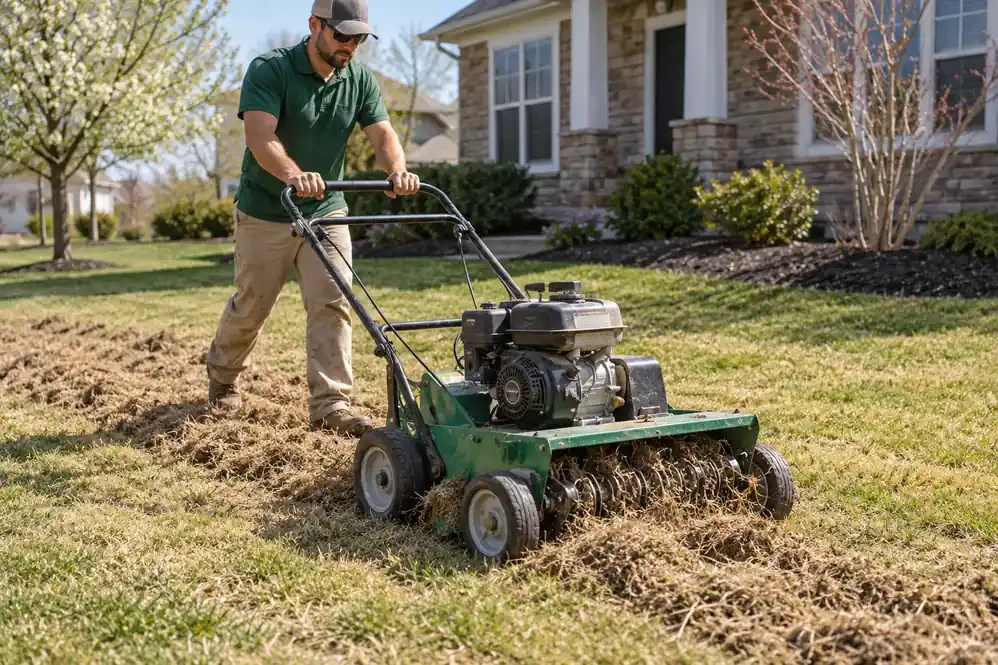 Dethatching
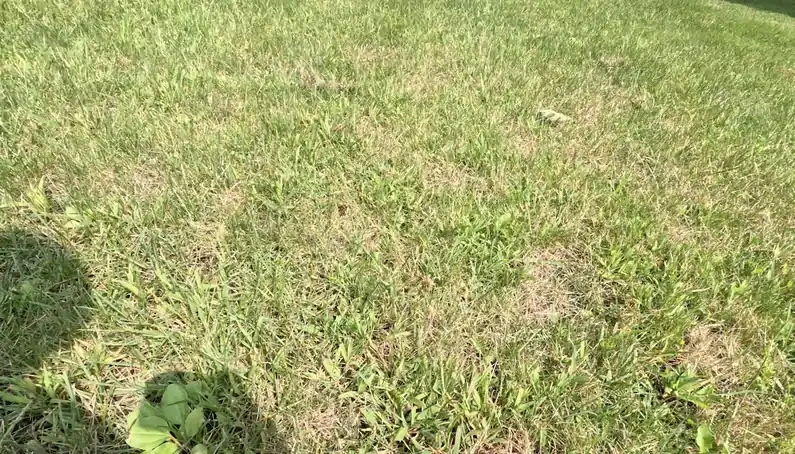 Lawn Disease & Fungus Treatment
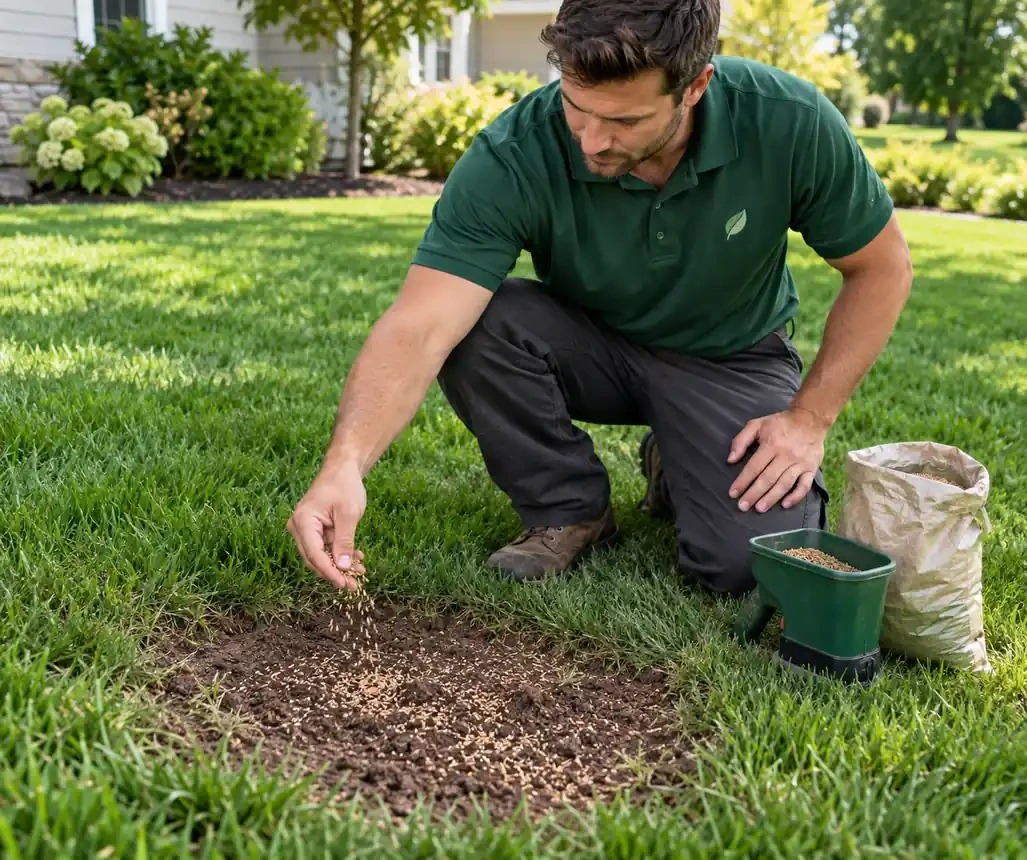 Lawn Repair & Bare Spot Repair
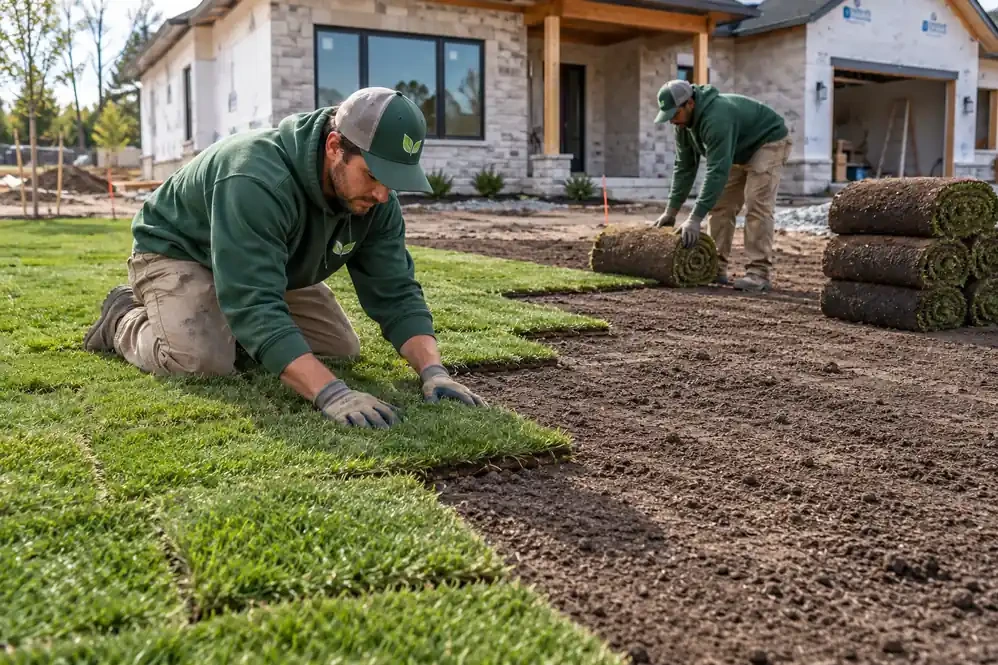 New Lawn & Sod Installation
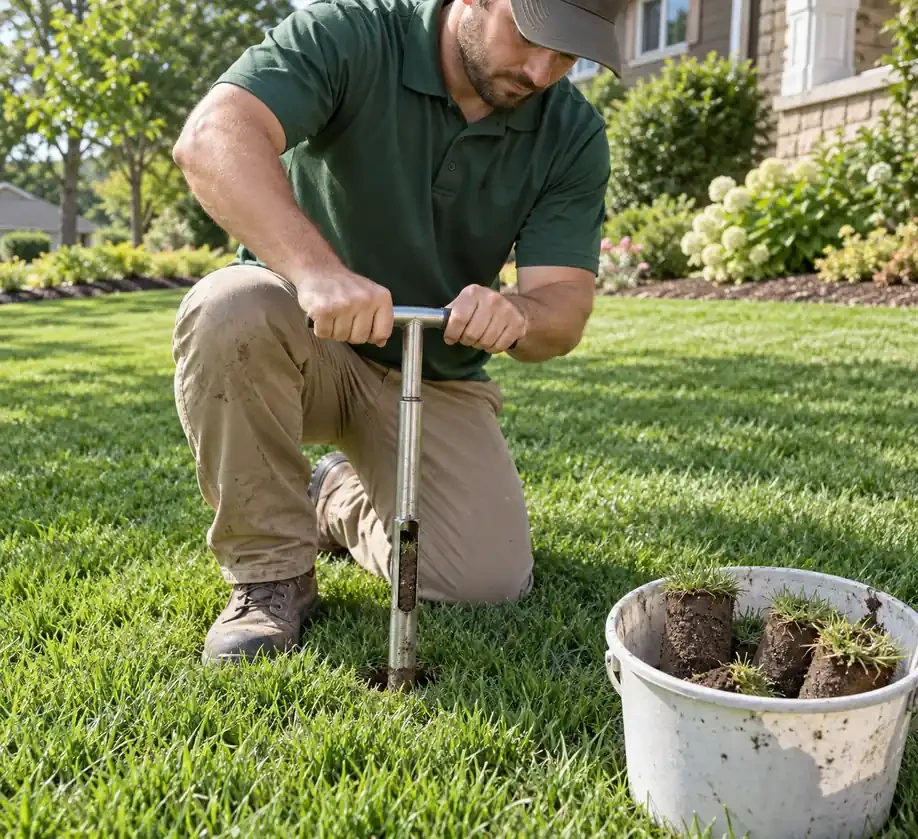 Soil Testing & pH Management
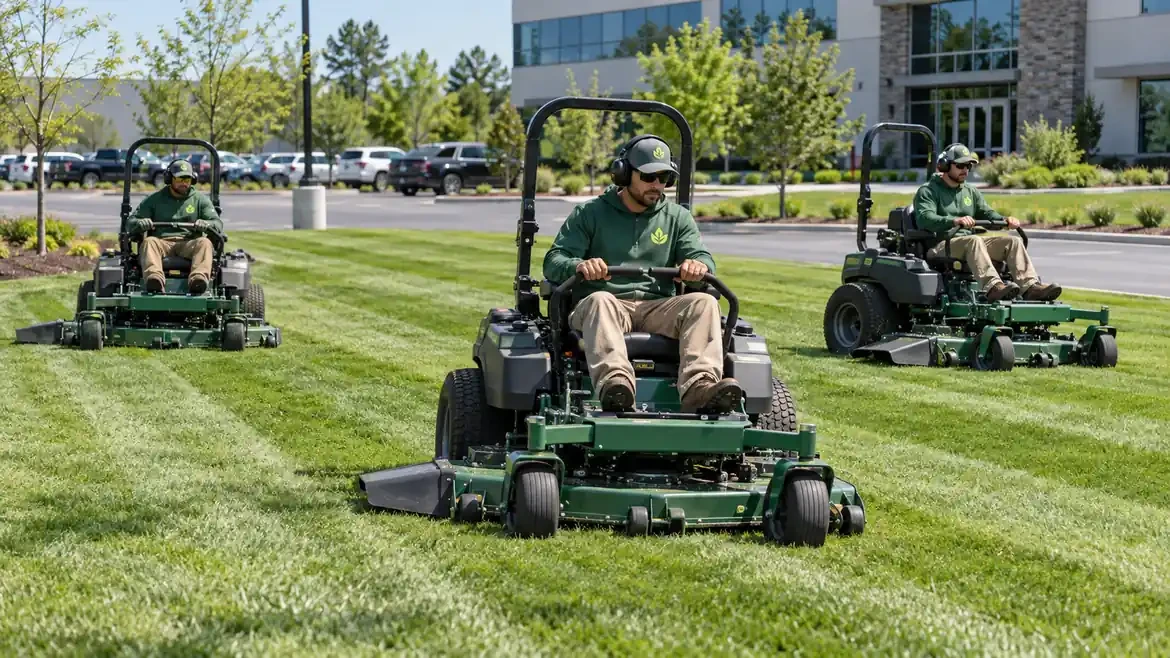 Commercial Lawn CareLawn MowingFertilization & Weed ControlCrabgrass PreventionGrub ControlSpring CleanupFall CleanupSnow RemovalLawn Care Programs & PricingDethatchingLawn Disease & Fungus TreatmentLawn Repair & Bare Spot RepairNew Lawn & Sod InstallationSoil Testing & pH ManagementCommercial Lawn Care
Ready to Fix That Thin, Compacted Lawn?
Get your free aeration and overseeding quote.