Lawn Repair & Bare Spot Repair in Lincoln, NE
A bare or dead patch rarely fixes itself, and tossing seed on top of the problem without knowing the cause usually means it comes back next season. We find out why the grass actually died, whether that’s grubs, dog urine, compaction, foot traffic, or disease, then repair the spot the right way so it stays fixed.
What’s Actually Causing Your Bare Spot
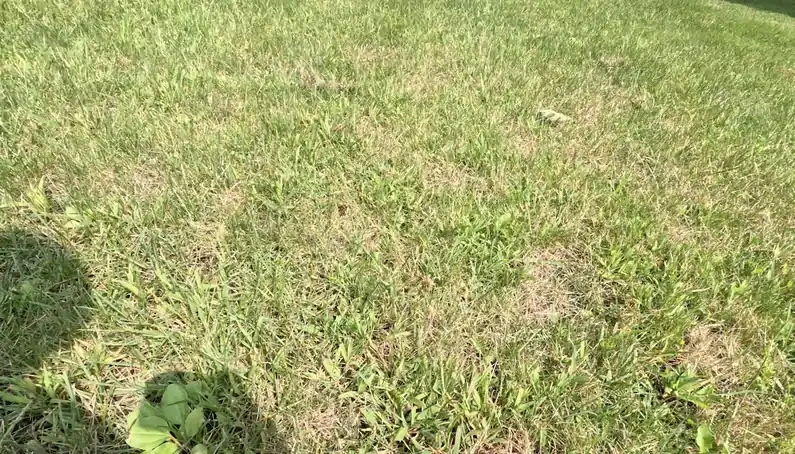
The shape, location, and feel of the damaged area tell us most of what we need to know before we even touch it:
| Cause | What It Looks Like | Quick Check |
|---|---|---|
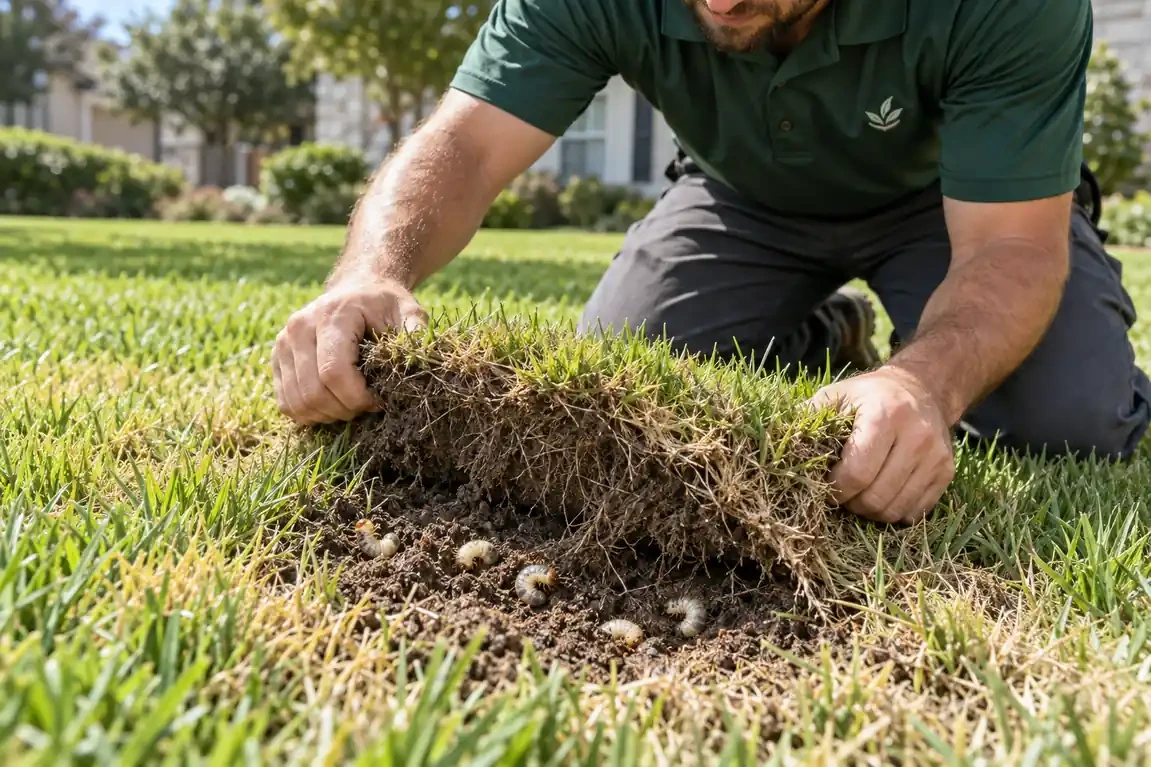
| White grubs | Irregular patches, turf lifts like loose carpet | Tug test, count grubs per sq ft |
| Dog urine | Small round spots, 3–12 inches, straw-colored center with darker green ring | Near gates, fence lines, favorite paths |
| Foot traffic / compaction | Worn paths, thinning along regular routes | Location matches a shortcut or play area |
| Grass disease | Circular or irregular patches, sometimes with visible fungal texture | See our disease treatment page |
| Shade | Thin, weak turf under trees or structures, not fully bare | Persistent regardless of watering |
| Poor drainage / compaction | Spongy, waterlogged, or hard-as-brick soil | Water pools or runs off instead of soaking in |
The Tug Test
Grab a handful of grass at the edge of the damaged area and pull gently. If it resists and holds, the roots are alive and the area can often recover with the right care. If it lifts up loosely with little resistance, the roots and crowns are dead, and the spot needs reseeding or resodding, not just fertilizer.
Fixing the Cause Before the Symptom
Reseeding a bare spot without addressing why it went bare is the single most common repair mistake. Grass seeded over an active grub population, unresolved compaction, or a dog’s regular bathroom spot gets damaged again.
- Grub damage: treat for grubs first (see our grub control service), then repair the turf
- Dog urine spots: flush the area with water to dilute salts and nitrogen, and talk to us about training or placement options before reseeding the same spot repeatedly
- Compacted soil: aerate the area before seeding so new roots have somewhere to actually grow
- Disease: correct the fertility or drainage issue driving the disease, then repair the dead turf
- Foot traffic: consider a stepping stone or mulch path if the same route keeps getting worn bare
Our Repair Process
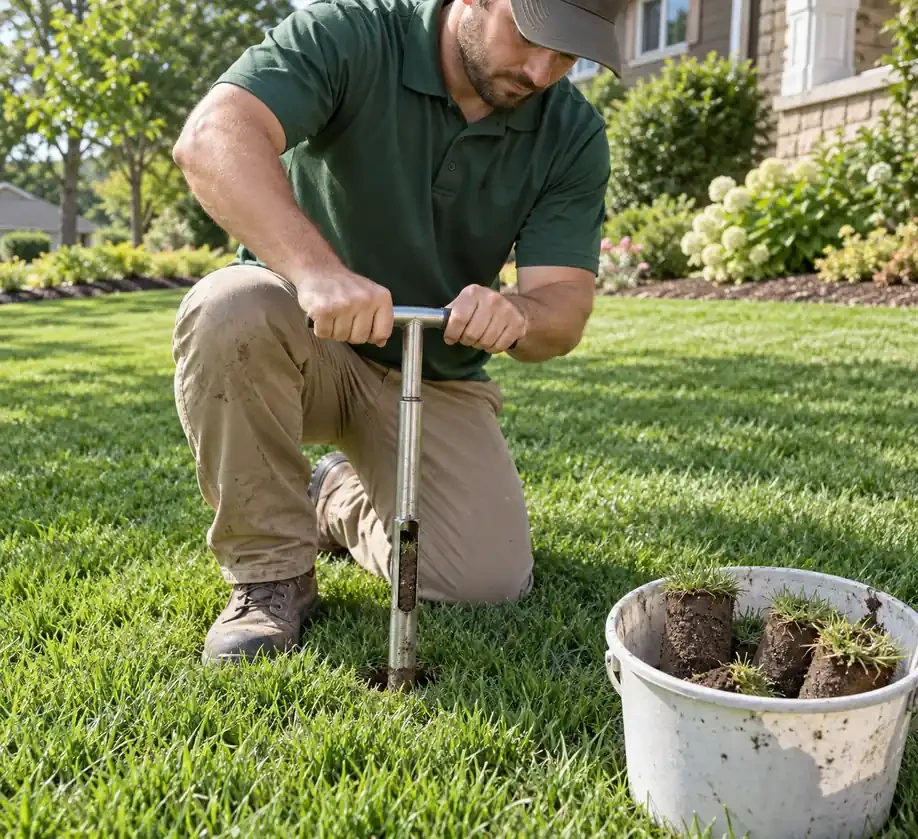
- Diagnose the cause using the tug test, soil check, and pattern of damage
- Remove dead grass and debris from the affected area down to clean soil
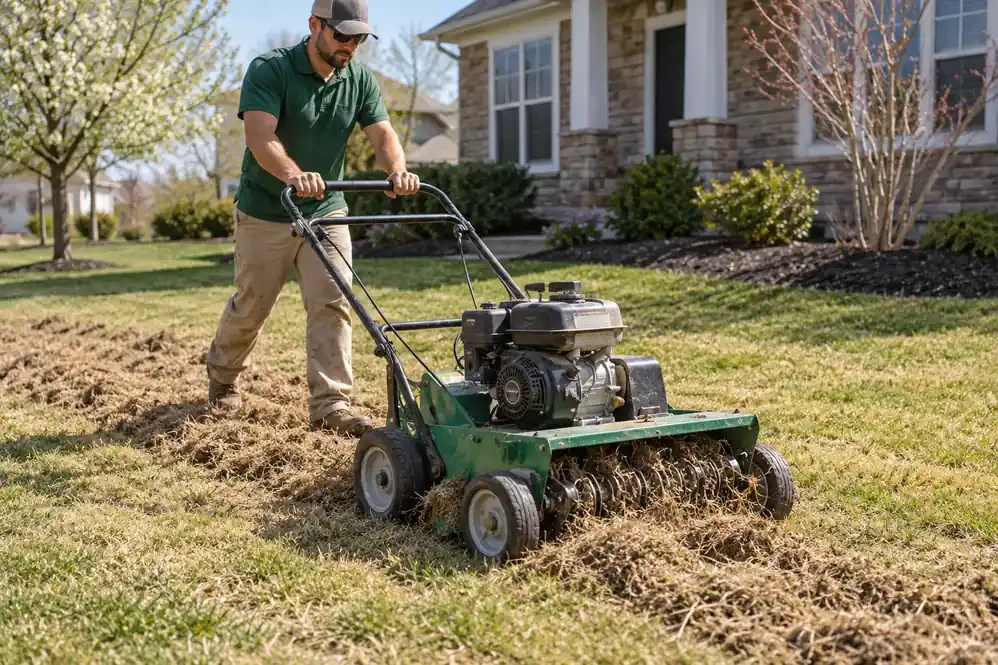
- Loosen the soil, since compacted ground won’t hold new roots regardless of seed quality
- Address the root cause (grub treatment, aeration, drainage correction) before replanting
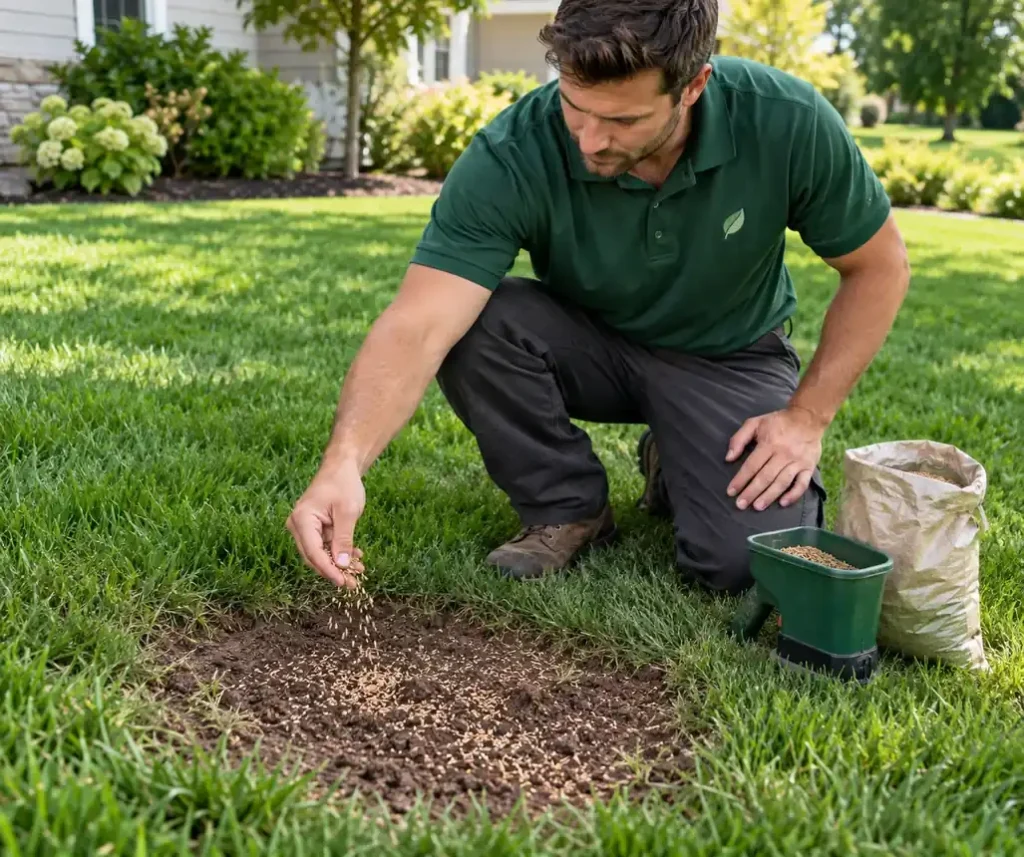
- Reseed with blue-tag certified seed matched to the site (tall fescue for most Lincoln lawns, shade-tolerant fine fescue for shaded areas)
- Keep the area consistently moist for 2 to 3 weeks while new grass establishes
- Restrict traffic on the repaired area until it’s been mowed a few times
Seed Repair vs. Sod Patch
| Seed Repair | Sod Patch | |
|---|---|---|
| Best for | Small to medium spots, matching existing lawn exactly | Larger areas, or when you need it looking finished immediately |
| Timeline | 2 to 4 weeks to establish | Immediate, rooted within 1 to 2 weeks |
| Cost | Lower | Higher, priced per square foot |
| Match to existing lawn | Easier to blend seamlessly over time | Can show a visible seam initially |
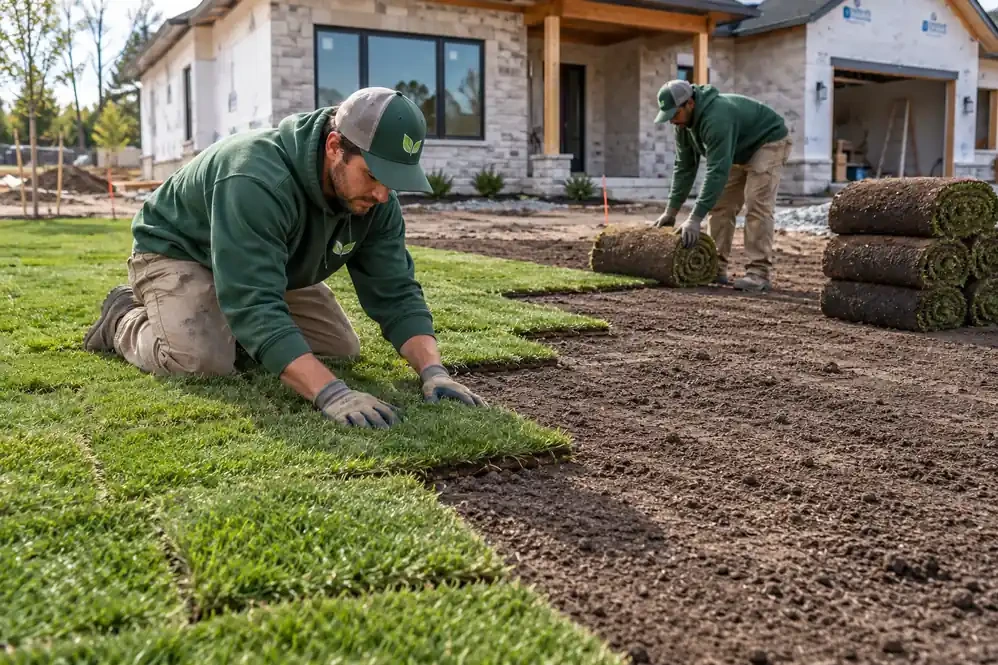
For most single bare spots from grubs or dog damage, seed repair blends in better over a season. Sod makes more sense for larger damaged areas or spots you need to look finished right away.
Best Time to Repair Bare Spots in Lincoln
Late summer to early fall (mid-August to mid-September) is the ideal window, matching Lincoln’s broader overseeding calendar, since cool-season grass establishes fastest with less weed competition. Spring repair (April) works as a secondary option but competes more with weeds and summer heat stress right as new grass is still establishing.
Urgent spots, like dog damage right before you’re selling a house or hosting an event, can be patched at other times of year, just with a longer establishment window and more careful watering.
Lawn Repair Pricing in Lincoln
| Repair Size | Seed Repair | Sod Patch |
|---|---|---|
| Small (1 – 4 spots, under 25 sq ft total) | $60 – $100 | $90 – $150 |
| Medium (multiple spots, 25 – 100 sq ft) | $100 – $200 | $180 – $350 |
| Large (100+ sq ft, or full section) | $200 – $400+ | $350 – $700+ |
Pricing includes diagnosis, soil prep, and the repair itself. Cause-related treatment (grub control, aeration) is quoted separately if your lawn needs it alongside the repair.
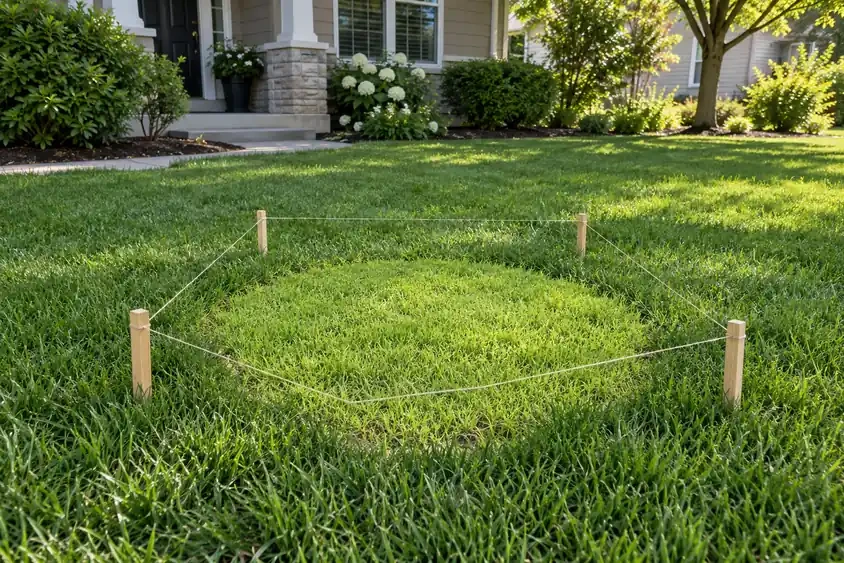
Why We Stake Off Fresh Patches
New seed and sod have zero traffic tolerance for the first few weeks. We stake off repaired areas so pets, kids, and mowers stay off while roots take hold, the single easiest way to make sure a repair actually sticks instead of needing to be redone.
Lawn Repair FAQs
Why did my reseeded spot die again?
Almost always because the underlying cause was never addressed, active grubs, unresolved compaction, a dog still using the same spot, or a disease that wasn’t treated. We diagnose the cause before we ever put seed down.
Can I just throw grass seed on a bare spot myself?
You can, but without loosening the soil, matching the right seed to the site conditions, and watering correctly for 2 to 3 weeks, results are usually thin and patchy. It also won’t stick if the original cause is still active.
How do I know if my dog is causing the bare spots?
Look for small, round, sharply defined spots, often 3 to 12 inches wide, near gates, fence lines, or a dog’s regular path, usually with a straw-colored center and slightly greener ring around the edge from diluted nitrogen.
Is seed or sod better for my situation?
Seed blends more naturally with your existing lawn over a season and costs less. Sod gives an immediate, finished look and handles larger areas well, but can show a visible seam at first. We’ll recommend based on the size and location of your repair.
How long until a repaired spot matches the rest of my lawn?
Seed repair typically blends in within one full growing season. Sod looks matched almost immediately in color, though the seam line fades over several weeks as roots knit together.
Can bare spots be a sign of a bigger lawn problem?
Sometimes. Recurring bare spots in the same areas often point to a chronic issue, drainage, shade, or soil compaction, that needs a structural fix like aeration or a drainage correction rather than repeated reseeding.