Lawn Disease & Fungus Treatment in Lincoln, NE
Circular brown patches, pink or reddish threads on the grass blades, or a lawn that looks sick despite regular watering usually points to a fungal disease, not a watering or mowing problem. Nebraska’s humid summers and wet springs create ideal conditions for several turf diseases specific to tall fescue and Kentucky bluegrass. We diagnose which one you actually have and treat the cause, not just the symptom.
Common Lawn Diseases in Lincoln, NE
Nebraska Extension identifies several turfgrass diseases as the primary concerns for residential lawns in this region:
| Disease | What It Looks Like | Favorable Conditions |
|---|---|---|
| Brown Patch | Circular brown patches, gray “smoke ring” visible in morning dew | Hot, humid weather, 80–90°F, excess nitrogen |
| Dollar Spot | Small, silver-dollar-sized bleached circles | Low nitrogen, low soil moisture, heavy dew |
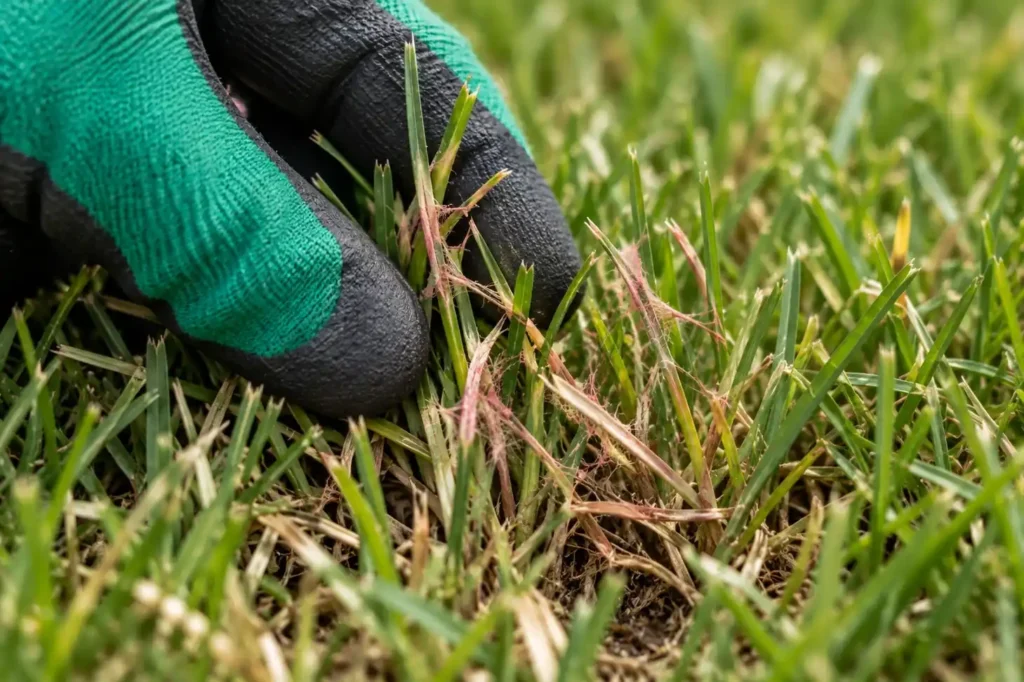
| Red Thread | Pink or reddish thread-like fungal strands binding grass blades | Cool, wet weather, low nitrogen fertility |
| Rust | Orange-red powdery spores that rub off on shoes or hands | Cool, humid autumn weather, slow-growing turf |
| Summer Patch | Circular patches of thinning, wilted grass in summer | Heat and drought stress, compacted soil |
| Snow Mold | Tan or pink matted patches after snow melts | Extended snow cover over unmowed, wet turf |
| Leaf Spot / Melting Out | Small brown or purple spots on blades, progressing to thinning | Cool, wet spring weather |
The Two Diseases That Point in Opposite Directions
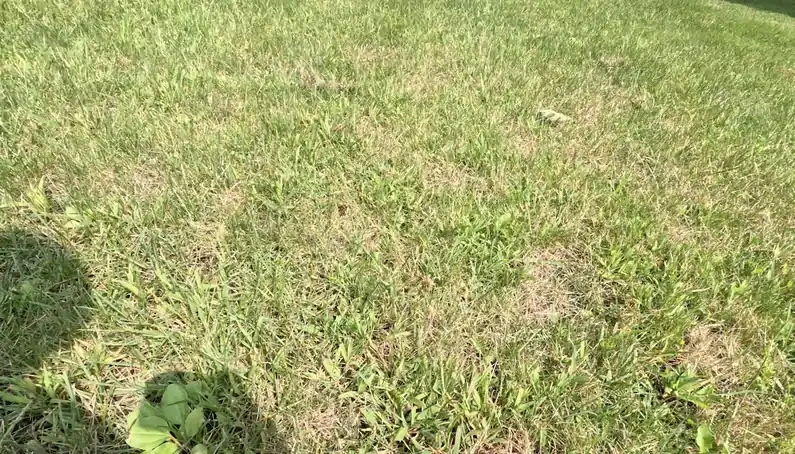
This is where a lot of DIY treatment goes wrong. Brown patch and dollar spot look similar to an untrained eye but need opposite fixes.
- Brown patch is made worse by excess nitrogen. The fix is backing off fertilizer during hot, humid stretches.
- Dollar spot and red thread are signs of low nitrogen. The fix is a light fertilizer application, which is often enough on its own to mask and resolve the symptoms.
Treating dollar spot like it’s brown patch, by withholding fertilizer, actually makes it worse. Correct identification comes first, every time.
How We Diagnose What’s Actually Wrong
- Pattern and shape. Circular rings, silver-dollar spots, and thread-like patches each point to different diseases.
- Color of the fungal growth itself. Reddish threads, grayish smoke rings, and orange spore dust are each distinct visual signatures.
- Time of year and recent weather. Red thread and rust favor cool, wet conditions. Brown patch and summer patch show up in summer heat and humidity.
- Your recent fertilization and watering history. Nitrogen levels and watering timing are often the actual root cause, not just a coincidence.
Cultural Fixes That Matter as Much as Any Product
Most turf diseases are opportunistic. They take hold when the lawn is already stressed by watering, mowing, or fertilizing habits. Fixing the underlying cause often does more than any fungicide application:
- Water in the morning, not the evening. Grass that stays wet overnight is far more disease-prone. Watering midday to early morning lets blades dry before dark.
- Water deeply and infrequently, about 1 inch per week, rather than light daily watering that keeps the surface constantly damp.
- Don’t over-fertilize. Heavy nitrogen, especially quick-release, feeds brown patch and summer patch directly.
- Mow at the correct height and keep blades sharp. Ragged, torn grass tips from a dull blade are easier for fungus to colonize.
- Improve drainage and airflow through aeration if disease keeps returning in the same low or shaded spots.
When Fungicide Treatment Is Actually Needed
For most home lawns, diseases like dollar spot and red thread cause cosmetic damage and resolve with a fertility correction alone. Fungicide treatment becomes worthwhile when:
- The same area is severely affected year after year
- Damage is spreading rapidly and threatening large sections of turf
- A fertility or watering fix hasn’t resolved it within a reasonable window
- The lawn has a documented history of a specific aggressive disease
We treat with fungicide when the situation calls for it, not as a default first step, since most Lincoln lawn disease issues are fixable through fertility and watering corrections alone.
Disease Prevention Built Into Our Program
The best defense against turf disease in Lincoln is simply a well-managed lawn:
- Fall aeration relieves the soil compaction that stresses turf and invites disease
- Correctly timed fertilization (see our fertilization program) avoids the nitrogen extremes that favor brown patch on one end and dollar spot on the other
- Proper mowing height keeps grass resilient rather than stressed
- Overseeding thin areas removes the open, weak turf that disease colonizes first
Lawn Disease Treatment Pricing in Lincoln
| Service | Typical Price |
|---|---|
| Diagnosis visit (identify disease + recommendation) | $40 – $60 |
| Cultural correction (fertility/watering adjustment) | Often included with diagnosis |
| Targeted fungicide application | $65 – $130, size-dependent |
| Disease-related aeration & overseeding follow-up | Priced per aeration/overseeding rates |
Many disease cases resolve with a diagnosis visit and a fertility correction alone, without needing a separate fungicide treatment.
Get My Free QuoteLawn Disease FAQs
How do I know if it’s disease and not just drought stress?
Drought stress tends to affect the whole lawn evenly, especially high spots and areas near pavement. Disease usually shows as distinct, patterned patches, circular rings, silver-dollar spots, or thread-like fungal growth, often with a specific texture or color you can see up close.
Why does my lawn have brown patch in one area and dollar spot in another?
This is common and usually reflects different microclimates in your yard. A shadier, poorly drained corner might favor brown patch, while a sunnier, leaner area might favor dollar spot. We treat each area based on what’s actually happening there.
Will fertilizing make my lawn disease worse?
It depends which disease you have. It helps dollar spot and red thread, both signs of low nitrogen. It can worsen brown patch and summer patch, which are aggravated by excess nitrogen during hot weather. This is exactly why correct identification matters before any fertilizer decision.
Is lawn disease permanent?
Rarely. Most common turf diseases in Lincoln, including dollar spot, red thread, and rust, cause cosmetic damage that resolves once the underlying cause (fertility, watering, or weather) is corrected. Severe or repeated summer patch and brown patch can cause lasting thinning if left unaddressed for multiple seasons.
Can I prevent lawn disease without chemicals?
Largely, yes. Correct watering timing (morning, not evening), proper mowing height and sharp blades, balanced fertilization, and good drainage through aeration prevent most of the common diseases we see in Lincoln without any fungicide needed.
What’s that gray, cobwebby stuff on my lawn after the snow melted?
That’s almost certainly snow mold, not a summer disease. See our fall and spring cleanup services for how we handle it, raking and airflow resolve most cases without fungicide.
You Might Also Need
 Lawn Mowing
 Fertilization & Weed Control
 Aeration & Overseeding
 Crabgrass Prevention
 Grub Control
 Spring Cleanup
 Fall Cleanup
 Snow Removal
 Lawn Care Programs & Pricing
 Dethatching
 Lawn Repair & Bare Spot Repair
 New Lawn & Sod Installation
 Soil Testing & pH Management
 Commercial Lawn CareLawn MowingFertilization & Weed ControlAeration & OverseedingCrabgrass PreventionGrub ControlSpring CleanupFall CleanupSnow RemovalLawn Care Programs & PricingDethatchingLawn Repair & Bare Spot RepairNew Lawn & Sod InstallationSoil Testing & pH ManagementCommercial Lawn Care
Not Sure What’s Wrong With Your Lawn?
Get a free diagnosis and treatment quote.