
New Lawn & Sod Installation in Lincoln, NE
Whether you’re starting from bare dirt after construction, replacing a lawn that’s beyond repair, or want instant coverage instead of waiting on seed, we install sod and new lawns built for Lincoln’s clay soil and climate from day one. Proper grading and soil prep before the sod ever goes down is what actually determines whether a new lawn thrives or struggles. Installation typically runs $0.65 to $1.50 per sq ft depending on site prep needed.
Sod vs. Seed for a New Lincoln Lawn
| Sod | Seed | |
|---|---|---|
| Time to usable lawn | Days to a few weeks | Weeks to a full season |
| Cost | Higher upfront | Lower upfront |
| Erosion/mud control | Immediate | None until established |
| Weed competition | Minimal, established turf crowds weeds out | Higher, bare soil is open to weed seed |
| Grass variety options | More limited to what’s grown locally | Wider seed blend selection |
| Best for | New construction, erosion-prone slopes, quick turnaround | Large areas, budget projects, more grass variety choice |
For most new-construction lawns and full renovations in Lincoln, sod is worth the premium because it controls mud and erosion immediately, something bare dirt lots in Nebraska’s rainy spring stretches genuinely struggle with.
Site Preparation, the Part That Actually Matters
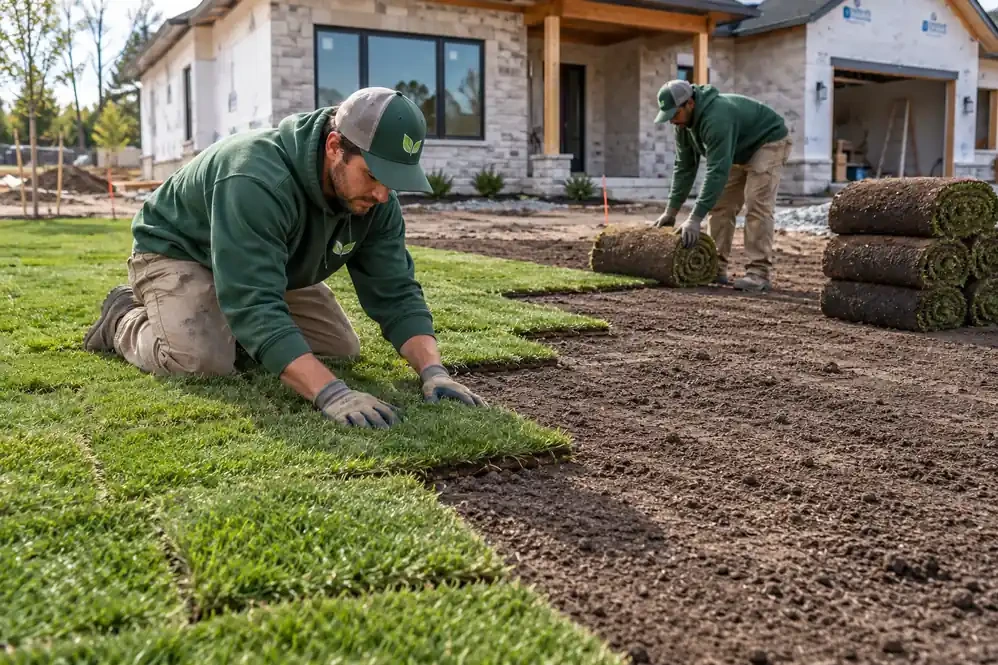
Sod laid on poorly prepped ground fails regardless of quality, and this is where a lot of installs go wrong. Our process:
- Site assessment for sunlight, drainage, and existing soil condition
- Clear and remove old grass, weeds, construction debris, and rocks
- Grade the ground so water flows away from the foundation, not toward it
- Address compacted or poor soil before laying anything, since Lincoln’s clay-heavy lots often need amendment or tilling to give new roots somewhere to actually grow
- Apply starter fertilizer high in phosphorus, which is specifically effective at establishment even though established Nebraska lawns rarely need extra phosphorus
- Lay sod in a staggered brick pattern, tight seams, no gaps
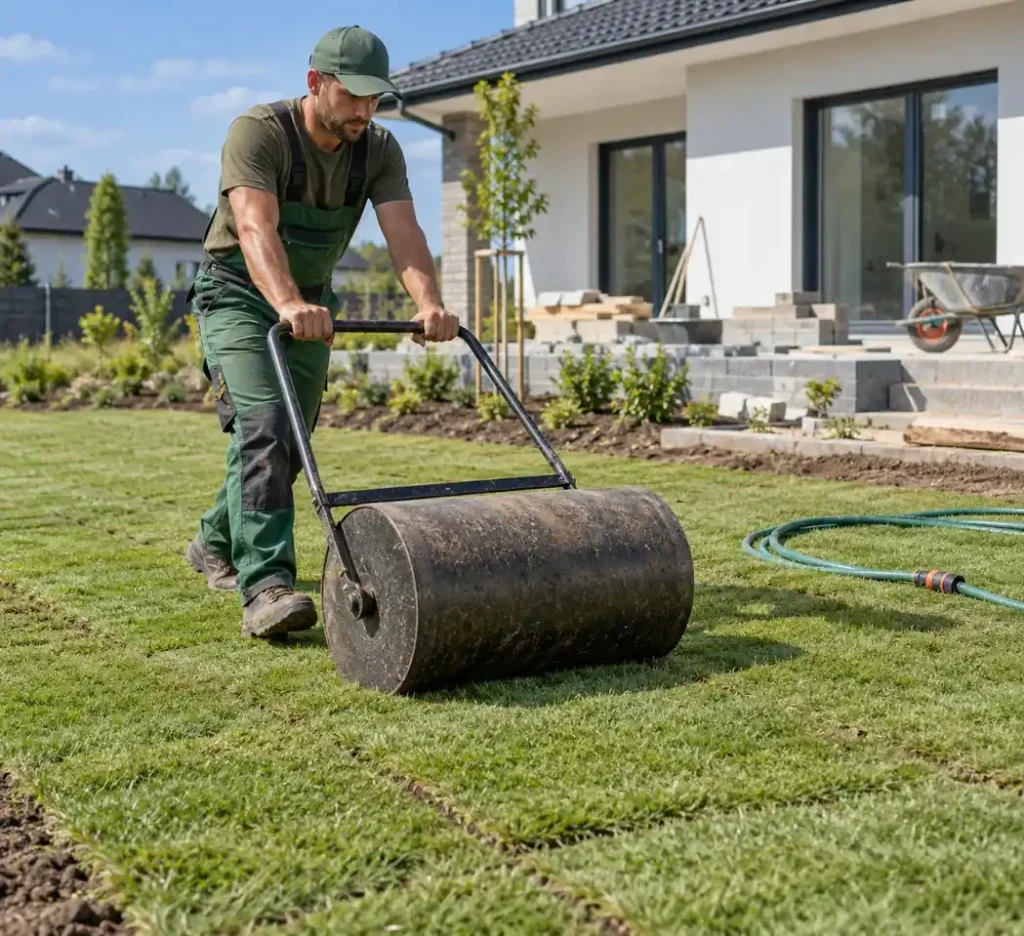
- Roll the sod to ensure good soil contact and remove air pockets, without compacting the soil underneath
- Water immediately and thoroughly after rolling
Best Time to Install Sod in Lincoln
| Season | Suitability | Notes |
|---|---|---|
| Spring (April – May) | Good | Mild temps, but competes with spring weed pressure |
| Early fall (Aug – Sept) | Best | Cooler temps, less weed competition, roots establish before winter dormancy |
| Summer | Workable, higher maintenance | Heat demands aggressive watering, higher stress risk |
| Winter | Avoid | Frozen ground blocks rooting entirely |
Ideal soil and air temperatures for sod establishment run 50–70°F soil and 70–90°F air, which in Lincoln lines up closely with the same late-August-to-mid-September window that’s best for overseeding. That said, sod can technically go down anytime the ground isn’t frozen, spring and summer installs just need more attentive watering to compensate.
Watering New Sod, Week by Week
This is the single biggest factor in whether new sod takes root or dies. New sod can take months to fully root, so consistent moisture in the early weeks isn’t optional.
| Timeframe | Watering |
|---|---|
| First 1–2 weeks | Daily watering, keep soil consistently moist (not soggy). In hot weather, a light midday watering helps offset evaporation |
| Week 2–3 | Begin tapering to every other day as roots start to knit into the soil |
| After root establishment (~3–4 weeks) | Transition to normal deep, infrequent watering, about 1 inch per week |
| First mow | Once the grass reaches 2.5 to 3 inches, generally 6 to 10 days after installation |
Keep foot traffic off new sod entirely for the first two weeks, then light use only until the six-week mark when roots are strong enough for normal activity. Reflected heat off driveways, sidewalks, and south-facing walls dries adjoining sod faster, so those edges usually need extra attention.
New Commercial Construction and Development
New commercial builds and HOA developments face the same problem as a new home lot, amplified. Construction traffic compacts the subsoil severely, topsoil is often stripped or buried, and the site needs to look finished on a schedule that has nothing to do with the growing season.
Sod is usually the right call on commercial sites for the same reason it is on new residential construction: it controls mud and erosion immediately, which matters on Lincoln’s clay during a wet spring, and it gives an occupancy-ready appearance rather than a season of bare dirt and weeds.
We assess subsoil compaction before anything goes down, because sod laid over compacted construction fill roots poorly and thins out within a year or two. Soil testing is included on commercial installations, since stripped or disturbed sites frequently test differently than surrounding ground.
See our Commercial Lawn Care in Lincoln, NE page for details.
New Lawn & Sod Pricing in Lincoln
| Service | Price |
|---|---|
| Sod installation (includes prep + material) | $0.65 – $1.50 per sq ft |
| Heavy grading/soil correction (if needed) | $150 – $500+, site-dependent |
| Seed-based new lawn installation | $0.15 – $0.40 per sq ft |
| Starter fertilizer application | Included with installation |
A typical 5,000 sq ft new lawn runs roughly $3,250 to $7,500 for sod, or a few hundred dollars for a seeded installation, plus site prep if the ground needs correction. We give an exact quote after assessing your site’s condition.
Get My Free QuoteNew Lawn & Sod Installation FAQs
How long does it take for new sod to root?
Sod begins knitting into the soil within 1 to 2 weeks under good watering, but full root establishment can take a couple of months. Don’t judge it as “done” just because it looks green after a week.
Is sod or seed better for a Lincoln new-construction lawn?
Sod is generally the better choice for new construction because it controls mud and erosion immediately, which matters on Nebraska’s clay soil during wet spring stretches. Seed is more budget-friendly for large areas where erosion control isn’t as urgent.
Can I lay sod over my existing lawn?
Not recommended in most cases. Existing grass and thatch prevent good soil contact for the new sod’s roots. Removing or killing the old lawn and prepping bare soil gives far better, more reliable results.
How soon can I mow new sod?
Once it reaches 2.5 to 3 inches tall, usually 6 to 10 days after installation. Never remove more than a third of the blade height on that first cut.
What happens if I underwater new sod?
Gaps between sod strips open up, edges brown and die, and the sod can shrink and separate from the soil, all of which require costly patch repair. Consistent watering for the first two weeks isn’t optional, it’s what determines success.
Do I need a soil test before installing a new lawn?
It’s strongly recommended, especially on new construction where topsoil may have been stripped or disturbed. See our soil testing service for details on what we check and why it matters before you invest in new turf.
You Might Also Need
Ready for a Lawn That Establishes Right the First Time?
Get your free installation quote.