Soil Testing & pH Management in Lincoln, NE
Most lawn care advice online tells you to add lime to fix your soil. In Lincoln, that’s frequently the wrong move. Nebraska soils, especially in eastern Nebraska, are naturally alkaline, not acidic, and guessing at soil amendments without a test can waste money or actively hurt your lawn. We test your actual soil and treat what it needs, not what a generic guide assumes.
Why Lincoln Soil Is Different From What Most Advice Assumes
Most lawn care content is written assuming acidic soil that needs lime, which is accurate for a lot of the country but often backwards here. Many undisturbed eastern Nebraska soils run pH 7.5 or higher, meaning alkaline, not acidic. Land that’s been farmed or heavily disturbed can sometimes drop to pH 5.5 or below and genuinely need lime, but applying lime to naturally alkaline Lincoln soil, which is a very common DIY mistake copied from national advice, actively pushes pH in the wrong direction.
The pH scale is logarithmic, meaning a soil at pH 7 is ten times more alkaline than one at pH 6. Small differences matter more than they sound like they should.
The Ideal Range and What’s Actually True Here
- Ideal soil pH for most lawn grasses: 6.0 to 7.0
- Many untouched Lincoln-area soils: 7.5 or above
- Correction, when actually needed, requires sulfur to lower pH, not lime
- Always base pH correction on an actual test result, never a guess or a generic online guide
What a Proper Soil Test Actually Checks
A real soil test for your lawn should cover:
| Measurement | What It Tells You |
|---|---|
| Soil pH | Whether nutrients are actually available to your grass or locked out |
| Nitrogen (N) | Your lawn’s primary growth nutrient, though it’s mobile and changes fast |
| Phosphorus (P) | Rarely deficient in established Nebraska turf, but important for new lawn establishment |
| Potassium (K) | Supports root strength and stress tolerance |
| Organic matter % | Affects water retention; 3% or higher is considered good for Nebraska soil |
| Cation Exchange Capacity (CEC) | How well your soil holds onto nutrients between feedings |
Phosphorus deficiencies are rarely a real problem in established Nebraska lawns, except in soil with very high or very low pH. This is exactly why blanket “weed and feed” products with extra phosphorus are often unnecessary and, in some areas, restricted by state fertilizer law for that reason.
Two Things You Should Never Add Without a Test
🚫 Lime
Only appropriate for genuinely acidic soil. Adding it to Lincoln’s typically alkaline clay does nothing helpful and can push pH further from ideal.
🚫 Gypsum
Widely marketed as a way to “sweeten” soil or break up clay, but it does neither for most Nebraska lawns. Gypsum is only useful on soil with high salt content, where it helps displace salts. Adding sand to heavy clay is another common DIY mistake, it doesn’t loosen clay, it creates a texture closer to concrete.
We test first, then recommend, rather than selling a generic amendment package.
How Soil Testing Works
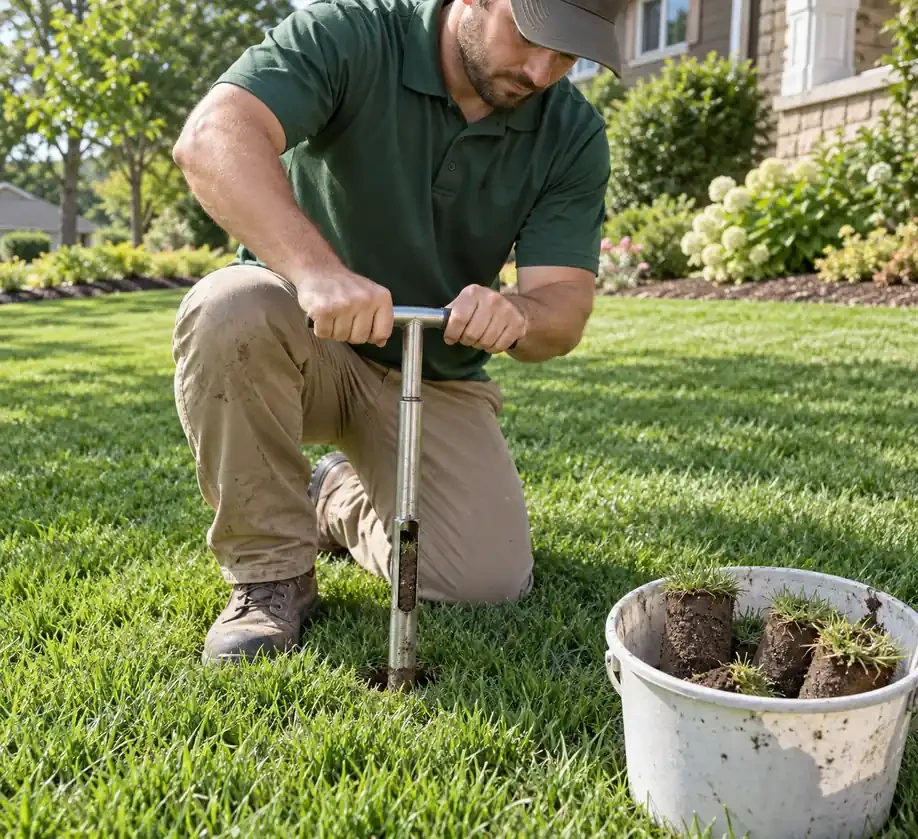
- Sample collection. We pull soil cores from multiple spots around your lawn (front, back, any problem areas) since conditions can vary significantly across one property.
- Lab analysis. Samples go to an accredited Nebraska soil lab for pH, nutrient, and organic matter testing.
- Results and recommendations, typically back within about two weeks, showing exactly what your soil needs and in what amount.
- Targeted treatment based on the actual numbers, not a generic seasonal package.
When Soil Testing Makes the Most Sense
- Before installing new sod or seed, especially on new construction where topsoil may have been stripped
- If your lawn struggles despite proper watering and mowing, since the cause is sometimes locked-out nutrients rather than a watering or pest problem
- Before adding lime, sulfur, or any major soil amendment, so you’re correcting an actual measured problem
- Every 3 to 5 years as routine maintenance for an established, healthy lawn
A Report You Can Actually Use
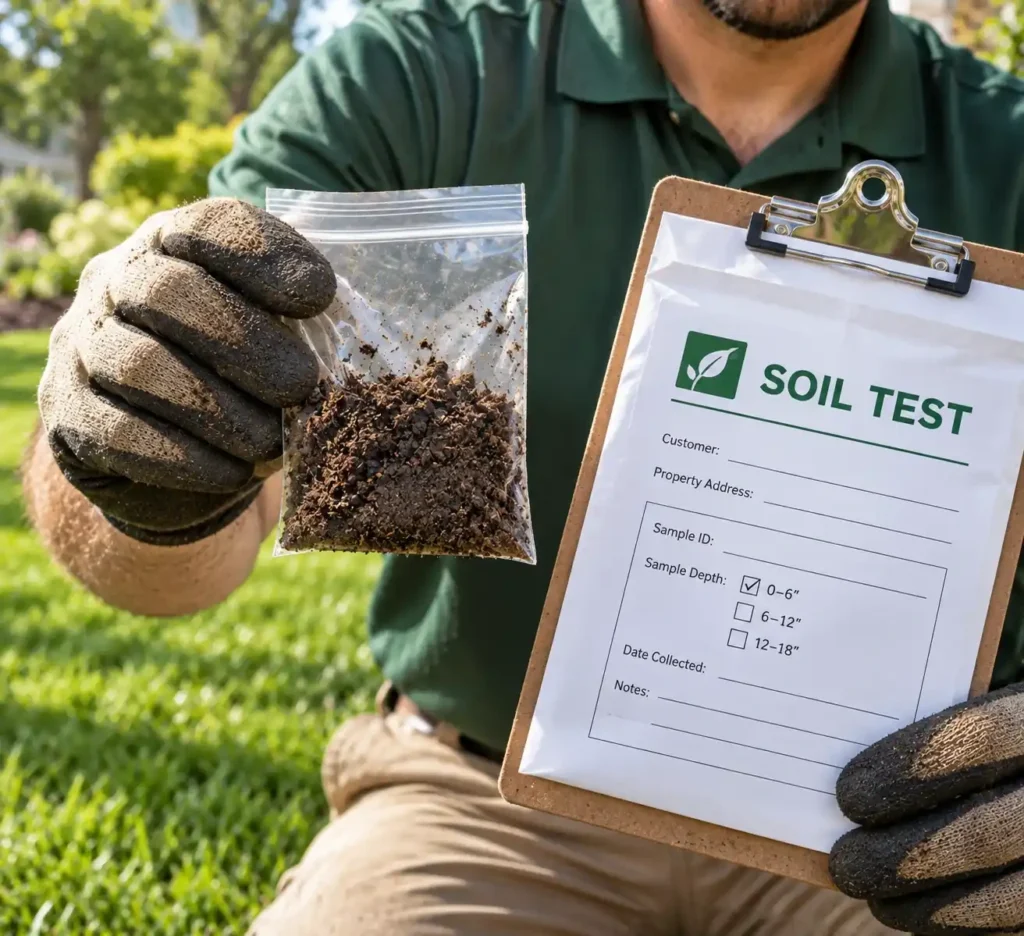
Every sample is labeled, logged, and sent to an accredited Nebraska lab. You get back real numbers, not a guess, pH, nutrient levels, and organic matter, with a plain-language explanation of what it means for your lawn and what (if anything) actually needs correcting.
Soil Testing Pricing in Lincoln
| Service | Price |
|---|---|
| Basic soil test (pH, N-P-K, organic matter) | $35 – $55 |
| Comprehensive test (adds CEC, micronutrients) | $55 – $85 |
| pH correction application (if needed, per test results) | $45 – $95, size-dependent |
Soil testing is also included as part of our new lawn and sod installation process at no separate charge.
Soil Testing FAQs
Does my Lincoln lawn need lime?
Probably not, and adding it without a test is a genuine risk of making things worse. Most undisturbed eastern Nebraska soil runs neutral to alkaline (pH 7.0+), the opposite of the acidic soil lime is meant to correct. We only recommend lime when an actual test shows genuinely acidic soil, which does happen on heavily farmed or disturbed sites.
Why does my lawn struggle even though I fertilize regularly?
If soil pH is too high or too low, some nutrients become chemically locked out of the soil regardless of how much fertilizer you apply. A soil test identifies whether pH, not fertilizer amount, is the actual bottleneck.
Is gypsum good for Nebraska clay soil?
Generally not. Gypsum doesn’t loosen clay or meaningfully change pH for most lawns. It’s only genuinely useful on soil with high salt content. If your goal is fixing compacted clay, aeration is the effective tool, not gypsum.
How often should I test my soil?
Every 3 to 5 years for a stable, established lawn. Test sooner if you’re installing a new lawn, dealing with persistent problems despite good care, or considering any pH-altering product.
How long do soil test results take?
Typically about two weeks from an accredited lab, along with specific recommendations based on your actual numbers.
Can I just buy a home soil pH test kit instead?
Home kits can give a rough pH reading but generally don’t provide reliable nutrient (N-P-K), organic matter, or CEC data, which matter just as much for an accurate treatment plan. A lab test gives you numbers you can actually act on with confidence.